
Everything you see on my site about anti virus programs,anti spyware software Internet security scams will be well researched and only then be brought to you! Take a look at the Categories I have listed!
In the Categories section called FREE PROGRAMS will be a list of my personal free program I use to protect mine and my families computers! I am so sick and tired of companies out here trying to rip you and me off with their fake programs. What I mean is they tell you to download their program for free and it finds all these problems, then you go and click fix problems only to find out you have to go and buy their crappy program to get rid of these viruses,spyware and god only knows what else it tells you they find!
The Anti virus program I use is free and it finds everything better then all the paid programs like Norton's ( My opinion only ) and free programs out there! Yes the anti virus software I use has a paid section which after a long time myself using it, I paid for, but it is free and it rocks out the viruses and spyware like nothing before! I also use Free spyware program that after several months of testing I liked it so much I paid for it!! While it's free it still protects you and kills the spyware that is on your PC! I also use the windows firewall for added protection!
Article Source: http://goo.gl/UUDvg
Sunday, August 28, 2011
Anti Virus Knowledge and Computer Common Sense

Monday, August 22, 2011
Effective Anti-Viruses For Mobile Phones

There are more than forty mobile phone viruses and threats that have been reported. Apparently, these viruses can badly damage your phone and can cause it to be of no use at all. Therefore, getting an anti-virus is vital to keep your mobile running well and efficient.
Zebra Virus Cleaner
One of the most effective anti-viruses that you can implement on your mobile phone is the Zebra Virus Cleaner for Symbian OS Smart Phone. This is a dependable anti-virus software that can protect your mobile from being assaulted by malevolent programs. Zebra Virus Cleaner can identify and clean rootkits, Lasco, Cabir, Skulls, plus nearly a thousand of viruses including Trojans and worms from your smart phone. It also provides security for all your personal files and information. Zebra Virus Cleaner scans quickly and gets rid of viruses completely in real time, easy to adopt and has a friendly feature. The users can set the time to scan and update automatically.
The Kaspersky Anti-Virus
With the growing recognition of smart phones and communicators, your phones may not be safe from malicious programs that were increasing both in numbers and variety. The Kaspersky Anti-Virus is the appropriate and reliable solution that will keep your mobile phones from such programs that affect the mobile platforms. It was developed and combined the latest technology of the Kasperky Lab technologies, experts in the antivirus field. Their solution offers competent armor for your smart phone and personal files.
Commander Mobile Anti-Virus
One of the most effective defends against mobile phones harmful content, unwanted messages and malfunctioning applications is the Commander Mobile Anti-Virus. With this anti-virus, you can scan both the principal memory and memory cards, thus providing an absolute and prompt protection. It can detect viruses such as Cabir and thoroughly remove them from the system. All files are automatically inspected when they are copied, synchronized, modified, saved, or downloaded. This will definitely put off corruption of your mobile phone files.
F-Secure Mobile Anti-virus
F-Secure Mobile Anti-virus is uncomplicated to adopt and does not need excess device resources or pointless user interaction. By design, it examines all files both in the device and on the memory cards. When a corrupted file is found, it is directly isolated to protect all the other data in the system. When the data connection is applied for emails and web browsing, the anti-virus database is updated unnoticeable in the background. F-Secure anti-virus also safeguards mobile computing by bringing together an integrated anti-virus and firewall. This platform makes available a remedy and automated security thru real time. The F-Secure Mobile Anti-Virus scans both the incoming and outgoing internet packets to thwart malicious, unsafe, or possibly destructive packets. F-Secure is also uncomplicated to apply.
These mobile software anti-viruses help us to stay composed and prepared for the attacks of malicious programs that can virtually impair the system of our phones. The defenses that they build into the network layer are the most valuable system of protection. In selecting mobile antivirus solution, look for the one that supports your device as well as its operating system. Also, the anti-virus software should be trouble-free to use, has over the air updates and a real time virus scanning and should scan all attachments for viruses. Although anti-viruses may significantly decelerate your mobile phone but it is beyond doubt the best protection.
Article Source: http://goo.gl/NurqR
Monday, August 15, 2011
Remove a Virus

These days there are so many ways to invade a person's privacy. And as our life becomes attached to technology we become more and more vulnerable.
There are a lot of people who use the internet and are unaware that almost every time they click, buy or fill out their name online, the information are saved somewhere as a cookie on your computer and can be retrieved to be used for and against them.
It is not to mean that all websites do this or every programmer would try to hack into your company or home computer. But the thing is, as information gradually becomes more of a commodity, criminals are now directing their attention to private and easily manipulated facts like credit card information and addresses.
Instructions
1: Click the start button, select "All Programs" and then "Windows Update." Allow the Windows Update application to load.
2: Find and click on the "Check For Updates" link on the left side of the screen. Allow the application to scan your computer for necessary updates to the Windows operating system and related applications such as the Microsoft Malicious Software Removal Tool.
3: Follow the on-screen directions to download and install the updates. Close the Windows Update application.
4: Click the start button, select "All Programs," "Accessories" and then "Run." Type "MRT" into the text box that appears and click the "OK" button.
5: Click the "Next" button at the bottom of the Microsoft Malicious Software Removal Tool Window. Select "Full Scan" in the window that appears and click the "Next" button.
6: Allow the scan to complete. The scan takes several minutes to over an hour to finish depending on the size and number of storage drives.
7: Follow the on-screen directions to remove any detected viruses and other malware. Click "Finish" to close the Microsoft Malicious Software Removal Tool.
Wednesday, August 3, 2011
Problems That Relate to Computer Virus

Computer viruses cause many problems for business and personal computers and their users. Viruses can cause large amounts of damage, from computer errors to data theft. Protect yourself and identify them early by looking for the following problems evident in your system.
Slow Computer
Viruses slow down your computer operation. Start up, normal operations and even Internet browsing may be affected.
Freezes
When a computer freezes, there is a good chance your system has been infected with a virus. Restart your computer to see if the problem persists. A virus is the likely culprit if this isn't a one-time problem.
Crashes
Verify that drivers, especially for new hardware, are up to date, if your system is crashing. A virus may be the cause if the problem continues.
Printing Issues
Scan your system for viruses, especially if you lose the ability to print and your printer appears online.
Anti-virus Software Disabled
Check if your anti-virus software has been disabled. Many viruses have the potential to disable such security software if not detected quickly enough.
Read more: http://goo.gl/A87N5
Saturday, July 23, 2011
Google Redirect Virus Help
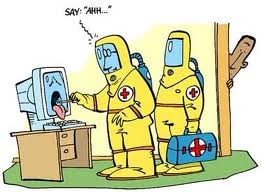
The "Google Redirect Virus" is a virus infection which is continually causing major problems for Windows computers all around the World. This virus is particularly bad because of the way it's unable to be removed by "traditional" antivirus programs. In order to get rid of it completely, you need to be able to use a special type of virus removal program that's going to be able to identify the infection and then remove it in the easiest & most effective way possible.
The Google redirect virus is basically a virus infection that "redirects" your search engine results to random websites. This virus is continually infecting 100's of computers around the World, and is extremely difficult to remove. You can normally tell if you have the infection because it will generally re-direct your search engine results 2 or 4 times before actually taking you to the proper website. It may also show random popups when browsing.
The problem with this virus is that it's so difficult to remove. It acts a lot differently than "normal" viruses, in that it will actually install itself on your computer, change a few of your web browser's settings and then just hide on your PC. This is a major issue as it will actually prevent many antivirus programs from being able to remove the infection. Typical antivirus tools will look for various applications / files that are running on your system and then remove them if they are infected. However, because the Google Redirect Virus just hides away, this cannot be done.
To get rid of this infection, it's advisable that you use a special antivirus program called "Combofix". This is a tool which will fix the various files where the Google Redirect Virus likes to hide, and should free up your computer for you. If you want to remove the Google Redirect virus infection, you really need to look at using this tool and the correct script that it requires to run.
After you've used ComboFix, it's then advisable you clean out any of the errors your system has by using a "registry cleaner". This is a software tool that will repair the various errors and damaged settings that your computer needs to run, allowing your PC to run like it did when it was new. Not many people realize this, but the Google Redirect Virus will actually leave a lot of damaged settings inside the "registry" of your PC, which will lead your system to re-open the problems on your system.
Article Source: http://goo.gl/c1Tnw
Monday, July 18, 2011
Recycler Virus Help

Dealing with the Recycler virus can be a frustrating ordeal, but it must be removed quickly to prevent damage to your computer's operating system or the loss of important data.
Identity
The Recycler virus is actually just one manifestation of the Lecna computer worm. Recycler.exe is just one of a number of files Lecna creates on the host computer.
Method
Once it has gained access to a computer, the worm makes numerous changes to the system's registry, installs malicious software and propagates by copying itself onto networked drives. It may also transfer the data it searches for to an outsider, giving that user access and control over the system.
Removal
To stop the virus, disable the System Restore function, if present, and initiate a virus scan using any available antivirus software. Avira, Avast, Kaspersky and TrendMicro are a few of the free antivirus programs available online.
Read more: http://goo.gl/YJY3n
Monday, July 11, 2011
Protect Yourself With Anti Virus Knowledge and Computer Common Sense
Anti spyware software Internet security scams will be well researched and only then be brought to you! Take a look at the Categories I have listed!
In the Categories section called FREE PROGRAMS will be a list of my personal free program I use to protect mine and my families computers! I am so sick and tired of companies out here trying to rip you and me off with their fake programs. What I mean is they tell you to download their program for free and it finds all these problems, then you go and click fix problems only to find out you have to go and buy their crappy program to get rid of these viruses,spyware and god only knows what else it tells you they find!
The Anti virus program I use is free and it finds everything better then all the paid programs like Norton's ( My opinion only ) and free programs out there! Yes the anti virus software I use has a paid section which after a long time myself using it, I paid for, but it is free and it rocks out the viruses and spyware like nothing before! I also use Free spyware program that after several months of testing I liked it so much I paid for it!! While it's free it still protects you and kills the spyware that is on your PC! I also use the windows firewall for added protection!
I use CcLeaner which is a free program to delete all your junk files and helps clean your registry and it's 100% free! I use male ware program which is free! The best defense is to make sure your computer is always updated with the latest updates from Microsoft and all your anti virus and anti spyware programs! Please take a look at the post I have made about how you can protect yourself and your family! The INTERNET should be fun and free from idiots trying to infect your computer! I hope you walk away with a better understanding on how their are bad things out there that can hurt your computer and your identity and your money!
Article Source: http://goo.gl/lx2mO